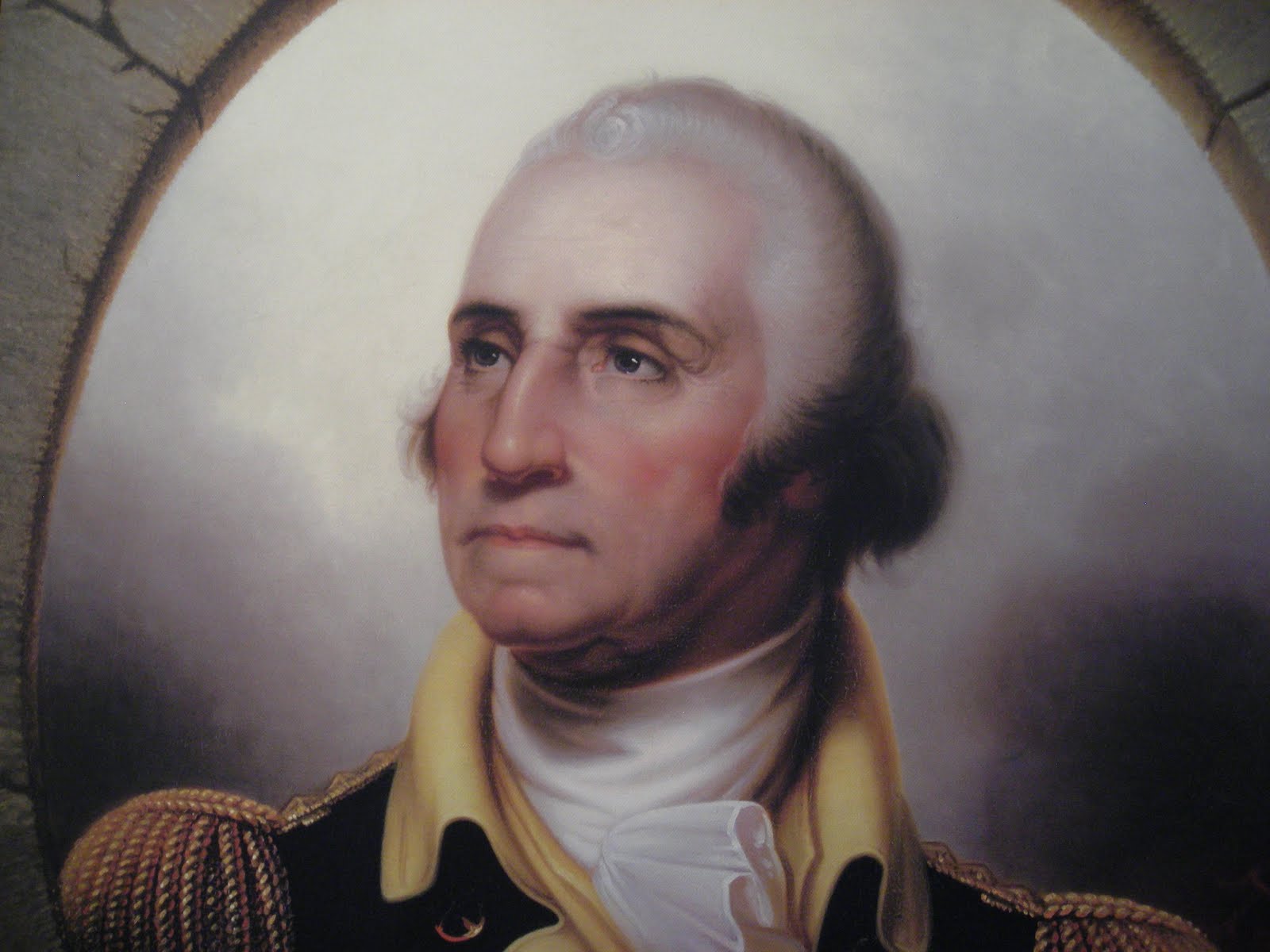
A year and a half after our first visit to Mount Vernon, we returned to mitigate our failure to visit the mansion during our first visit in 2009. It was a brilliant spring morning but uncharacteristically cool for late April.
Our experience started out quite differently than last time – the reason we skipped the mansion tour in September 2009 was because it was drizzling, chilly and the line waiting to get into the mansion was long — and outside.
 But this time, we learned that the long lines are a thing of the past. Now, the staff hands out timed entry tickets, so you’re free to wander around the grounds — the very informative grounds (in fact, much more so than the actual mansion tour, but we’ll get to that shortly) — while you wait the half hour or two hours to get in.
We arrived early enough (9:30 a.m.) so that we could go directly to the mansion. Sadly, though, buses filled with tour groups had already started lining the end of the George Washington Parkway.
Maybe we’ve been spoiled by visiting presidential houses during off-peak seasons and so tour guides have had more time to spend with us. And granted, Mt. Vernon is the most visited of all presidential houses — about one million people each year visit Mt. Vernon, compared with 450,000 at Monticello. But our tour of the mansion was comparatively disappointing.
The Mansion 'Tour'
Prior to entering the mansion, a female guide briefed us on the rules of the mansion. First, no pictures and no cell phones. Then we were told NOT to ask questions during the tour. This is apparently because the answers might take too long. Then she told us that they don’t allow pens in the mansion, which means no note-taking. When we told her that Monticello has no such rules, she said that this is Mount Vernon and they have different rules (It would have been helpful if she had given a real explanation, like they’re worried about graffiti). So we were left to our ability to recall — a talent that Cathy possesses more than Tom.
There are really no “tours” of the mansion but rather a line of people snaking through rooms. Guides are stationed at strategic points to give a one-minute narrative that they repeat almost immediately. Few details and no interpretation are offered. We were asked not to linger and to move along with the crowd.
But still, we got an idea of the home life of George and Martha Washington in the year 1799, the last year of George Washington’s life.
The first and most impressive room is the dining room, painted in Large Dining Room Green and Large Dining Room Verdigris. (We know this because the gift shop sells these paints through Fine Paints of Europe, in addition to Houdon Grey, Globe Thistle, and Cistern. It kind of cracks us up that they have ‘Europe’ in the title, but it is an American company.) The ceiling is decorated with images of farming tools because Washington, as we had discovered on our first visit, considered himself a farmer first and foremost. The walls are decorated with four paintings of rivers — the Potomac at Great Falls, the Potomac at Harper’s Ferry, the Hudson River, and one unknown river. A painting of French King Louis XVI hangs on the wall — homage to France for its help in the Revolutionary War. Most of the items in the room are original, including the three vases that perch on the Italian marble mantle.
We snaked our way into the main hallway. The most interesting item is an enormous key hanging on the wall — the key to the Bastille. It is a gift from Marie-Joseph Paul Yves Roch Gilbert du Motier (better known as the Marquis de Lafayette) to Washington. We learned that Washington was like a father to the much younger Lafayette. One of the upstairs rooms we see next is the “Lafayette Room,” where Lafayette would stay on his visits.
Also upstairs is Washington’s bedroom containing the bed where he lingered dying for 36 hours, slowly suffocating to death, according to one of the guides. Washington had contracted what is now thought to be acute epiglottitis on his last ride around the plantation on a cold, rainy December day. Bleeding Washington for a total of about five pints of blood during his last hours probably didn’t help the situation.
Outside we were allowed to linger and ask questions of the guides. We asked one of the women her most frequent question. “The most stupid one,” she asks? Sure. “What’s up those stairs,” is her choice as the most stupid question. The guides have decided the best answer is “the basement.”
On a more serious note she said that her most interesting discovery about Washington is that he had a sense of humor. As evidence she mentions one of the approximately 20,000 letters he wrote during his lifetime. In this particular letter he wrote to a European friend about the institution of marriage and said that in this country we customarily only do it once. (I think that most people — including presidents — have a sense of humor. It’s just that the evidence may not have survived.) She also mentioned another letter to his family, written in the midst of the Revolution, where he advises them to be sure to thin the carrot crop.
We asked another guide his opinion of Washington. He said that Washington was a “humble” man who could have been an “emperor like Cromwell” had he so chosen. He is not the first guide we have encountered on our travels who thinks that this is Washington’s true legacy. Washington could have continued serving as president and basically been king, but instead chose to step down at the end of two terms and let the new American citizens vote for a new leader.
Washington and Slavery
Washington had more than 300 slaves running the Mount Vernon plantation as well as four outlying farms.

During our previous visit, we had visited the 1983 slave memorial erected by Howard University. However, we didn’t see until now the 1929 slave memorial placed by the Mount Vernon Ladies Association, which runs Mount Vernon. It was the first memorial of its kind in the United States and it was to their credit that they erected the memorial. It was to their discredit that they called the slaves “faithful colored servants.”
 We viewed a slave cabin on the grounds close to the river. The cabin consisted of a single room with a mud floor, a straw-filled mattress on one side, and a fireplace and cooking area on the other. Signage indicated that such cabins could have held a family of eight including a husband and wife who worked on two different farms several miles apart on the Mount Vernon property, forcing them to be separated six days per week. One day per week, the husband would walk the five miles to spend Sunday with his family.
Washington willed his slaves to Martha with the stipulation that they be freed upon her death. Although she freed his slaves prior to her death, she was unable to free all the Mount Vernon slaves since some were held in trust for her children (from her previous marriage) and therefore was not legally allowed to. To make matters more complicated, some of those freed slaves had intermarried with others who were not.
George Washington, Farmer
George Washington’s passion was working his farm. He successfully experimented with crop rotation using a seven-year cycle. He also designed a 16-sided grain thrashing building, a replica that now stands on the grounds.
He was also a farmer of fish. When the fish were migrating in the Potomac River, his slaves were directed to harvest and process the fish to eat and sell. The fishermen were able to catch enough during the fish season to feed everyone on the plantation for the entire year.

Visitors to Mount Vernon can walk down a trail to a pier on the Potomac River, where boat tours are offered. There also is a working farm, where Colonial-dressed interpreters cook vegetables and beef in a pot over a fire (even in the sweltering sun of the Washington summer).
Museum and Education Center
 On this visit, we visited the museum, which we had missed last time—we had only toured the Education Center during our first visit. The highlight is a bust of Washington created by renowned French sculpture Jean Antoine Houdon in 1785 and is considered the most accurate likeness of Washington that exists. Houdon had turned down a commission from Catherine the Great to create this work. As part of the creation process, Houdon created a life mask of Washington, which he used to complete the bust. The bust was later used to create a statue of Washington in the Virginia state capital in Richmond.
The museum also contains many original works of art. The ones that most impressed me were those depicting the activities at Mount Vernon. One shows Washington and Lafayette deep in discussion on the porch of the mansion. Lafayette leans against the same pillar we had sat next to earlier that morning. Another shows Washington, Patrick Henry, Alexander Hamilton, and James Madison seated around a table on the grounds of the mansion. It is a snapshot of some of the most important people in American history.
 Visiting Mount Vernon
The tour of George Washington’s home is definitely not worth the $15, but the rest of the plantation is.
Visitors easily can spend several hours wandering around the plantation, which is fortunate, since the mansion tour takes maybe 15 minutes. In addition to the educational center and museum, visitors can roam the trails, visit replica stables and barns complete with farm animals, visit George Washington’s tomb, and the slave memorial. They also can wander down to the Potomac and visit the small working farm.
 Ground has been broken for a new library on the site, as well.
And be sure to linger on the chairs on the mansion’s porch overlooking the Potomac River. The view is spectacular — the “viewshed” was recently protected so that no development can be built across the river — and the chairs are comfortable. All that’s missing is some lemonade and cookies.
 Which brings us to — eat at the Mount Vernon Inn, if you get a chance. The food is good and isn’t particularly expensive. A tasty and huge pulled pork sandwich with homemade potato chips cost a mere $8.50, for example (cheaper than buying lunch in downtown D.C.). The salmon corncakes were also large and delicious, for $11.50. But be warned, the inn stops serving lunch at 2:30.
References
White McKenzie Wallenborn, W.M. 1997. George Washington's Terminal Illness: A Modern Medical Analysis of the Last Illness and Death of George Washington
There are really no “tours” of the mansion but rather a line of people snaking through rooms. Guides are stationed at strategic points to give a one-minute narrative that they repeat almost immediately. Few details and no interpretation are offered. We were asked not to linger and to move along with the crowd.
But still, we got an idea of the home life of George and Martha Washington in the year 1799, the last year of George Washington’s life.
The first and most impressive room is the dining room, painted in Large Dining Room Green and Large Dining Room Verdigris. (We know this because the gift shop sells these paints through Fine Paints of Europe, in addition to Houdon Grey, Globe Thistle, and Cistern. It kind of cracks us up that they have ‘Europe’ in the title, but it is an American company.) The ceiling is decorated with images of farming tools because Washington, as we had discovered on our first visit, considered himself a farmer first and foremost. The walls are decorated with four paintings of rivers — the Potomac at Great Falls, the Potomac at Harper’s Ferry, the Hudson River, and one unknown river. A painting of French King Louis XVI hangs on the wall — homage to France for its help in the Revolutionary War. Most of the items in the room are original, including the three vases that perch on the Italian marble mantle.
We snaked our way into the main hallway. The most interesting item is an enormous key hanging on the wall — the key to the Bastille. It is a gift from Marie-Joseph Paul Yves Roch Gilbert du Motier (better known as the Marquis de Lafayette) to Washington. We learned that Washington was like a father to the much younger Lafayette. One of the upstairs rooms we see next is the “Lafayette Room,” where Lafayette would stay on his visits.
Also upstairs is Washington’s bedroom containing the bed where he lingered dying for 36 hours, slowly suffocating to death, according to one of the guides. Washington had contracted what is now thought to be acute epiglottitis on his last ride around the plantation on a cold, rainy December day. Bleeding Washington for a total of about five pints of blood during his last hours probably didn’t help the situation.
Outside we were allowed to linger and ask questions of the guides. We asked one of the women her most frequent question. “The most stupid one,” she asks? Sure. “What’s up those stairs,” is her choice as the most stupid question. The guides have decided the best answer is “the basement.”
On a more serious note she said that her most interesting discovery about Washington is that he had a sense of humor. As evidence she mentions one of the approximately 20,000 letters he wrote during his lifetime. In this particular letter he wrote to a European friend about the institution of marriage and said that in this country we customarily only do it once. (I think that most people — including presidents — have a sense of humor. It’s just that the evidence may not have survived.) She also mentioned another letter to his family, written in the midst of the Revolution, where he advises them to be sure to thin the carrot crop.
We asked another guide his opinion of Washington. He said that Washington was a “humble” man who could have been an “emperor like Cromwell” had he so chosen. He is not the first guide we have encountered on our travels who thinks that this is Washington’s true legacy. Washington could have continued serving as president and basically been king, but instead chose to step down at the end of two terms and let the new American citizens vote for a new leader.
Washington and Slavery
Washington had more than 300 slaves running the Mount Vernon plantation as well as four outlying farms.

During our previous visit, we had visited the 1983 slave memorial erected by Howard University. However, we didn’t see until now the 1929 slave memorial placed by the Mount Vernon Ladies Association, which runs Mount Vernon. It was the first memorial of its kind in the United States and it was to their credit that they erected the memorial. It was to their discredit that they called the slaves “faithful colored servants.”
 We viewed a slave cabin on the grounds close to the river. The cabin consisted of a single room with a mud floor, a straw-filled mattress on one side, and a fireplace and cooking area on the other. Signage indicated that such cabins could have held a family of eight including a husband and wife who worked on two different farms several miles apart on the Mount Vernon property, forcing them to be separated six days per week. One day per week, the husband would walk the five miles to spend Sunday with his family.
Washington willed his slaves to Martha with the stipulation that they be freed upon her death. Although she freed his slaves prior to her death, she was unable to free all the Mount Vernon slaves since some were held in trust for her children (from her previous marriage) and therefore was not legally allowed to. To make matters more complicated, some of those freed slaves had intermarried with others who were not.
George Washington, Farmer
George Washington’s passion was working his farm. He successfully experimented with crop rotation using a seven-year cycle. He also designed a 16-sided grain thrashing building, a replica that now stands on the grounds.
He was also a farmer of fish. When the fish were migrating in the Potomac River, his slaves were directed to harvest and process the fish to eat and sell. The fishermen were able to catch enough during the fish season to feed everyone on the plantation for the entire year.

Visitors to Mount Vernon can walk down a trail to a pier on the Potomac River, where boat tours are offered. There also is a working farm, where Colonial-dressed interpreters cook vegetables and beef in a pot over a fire (even in the sweltering sun of the Washington summer).
Museum and Education Center
 On this visit, we visited the museum, which we had missed last time—we had only toured the Education Center during our first visit. The highlight is a bust of Washington created by renowned French sculpture Jean Antoine Houdon in 1785 and is considered the most accurate likeness of Washington that exists. Houdon had turned down a commission from Catherine the Great to create this work. As part of the creation process, Houdon created a life mask of Washington, which he used to complete the bust. The bust was later used to create a statue of Washington in the Virginia state capital in Richmond.
The museum also contains many original works of art. The ones that most impressed me were those depicting the activities at Mount Vernon. One shows Washington and Lafayette deep in discussion on the porch of the mansion. Lafayette leans against the same pillar we had sat next to earlier that morning. Another shows Washington, Patrick Henry, Alexander Hamilton, and James Madison seated around a table on the grounds of the mansion. It is a snapshot of some of the most important people in American history.
 Visiting Mount Vernon
The tour of George Washington’s home is definitely not worth the $15, but the rest of the plantation is.
Visitors easily can spend several hours wandering around the plantation, which is fortunate, since the mansion tour takes maybe 15 minutes. In addition to the educational center and museum, visitors can roam the trails, visit replica stables and barns complete with farm animals, visit George Washington’s tomb, and the slave memorial. They also can wander down to the Potomac and visit the small working farm.
 Ground has been broken for a new library on the site, as well.
And be sure to linger on the chairs on the mansion’s porch overlooking the Potomac River. The view is spectacular — the “viewshed” was recently protected so that no development can be built across the river — and the chairs are comfortable. All that’s missing is some lemonade and cookies.
 Which brings us to — eat at the Mount Vernon Inn, if you get a chance. The food is good and isn’t particularly expensive. A tasty and huge pulled pork sandwich with homemade potato chips cost a mere $8.50, for example (cheaper than buying lunch in downtown D.C.). The salmon corncakes were also large and delicious, for $11.50. But be warned, the inn stops serving lunch at 2:30.
References
White McKenzie Wallenborn, W.M. 1997. George Washington's Terminal Illness: A Modern Medical Analysis of the Last Illness and Death of George Washington


